


How to Plan Ahead for Adding Ozone to Your Pool

Note: This is a visual representation only. Always protect the swimming pool ozone generator from the elements.
The best time to plan for next year’s busy pool season isn’t next year. It’s right now, in the fall and winter, while your pool is closing up and you have time to think ahead. So how will you keep your family and friends happy while having clean, clear water with low-maintenance next year? Adding ozone to your pool with an ozone generator might be the last thing on your mind, but it may be the single best upgrade you make before the pool reopens.
Ozone (O3, a naturally occurring molecule made of three oxygen atoms) is a powerful, fast-acting disinfectant that pool professionals have used for decades to cut down on chlorine use, chemical odor, and maintenance headaches. Here’s how it works, why now is the time to look into it, and what real customers of A2Z Ozone say after making the switch.
The SP-3G: A2Z Ozone’s Recommended Home Pool Generator
For most home installations, A2Z Ozone recommends the SP-3G Swimming Pool Ozone Generator, an adjustable unit that pool owners and pool service professionals both trust for reliable, consistent performance.

SP-3G Swimming Pool Ozone Generator
Adding Ozone to Your Pool
Adding ozone to your pool is relatively easy. Some pool owners install the SP-3G themselves, and A2Z Ozone supports every experience level with setup guidance. That said, a skilled pool professional—someone who is already looking after your pool’s chemistry and equipment all season—is typically the best person to handle installation and keep the system dialed in.

Cabinet for an SP-3G Ozone Generator and Equipment
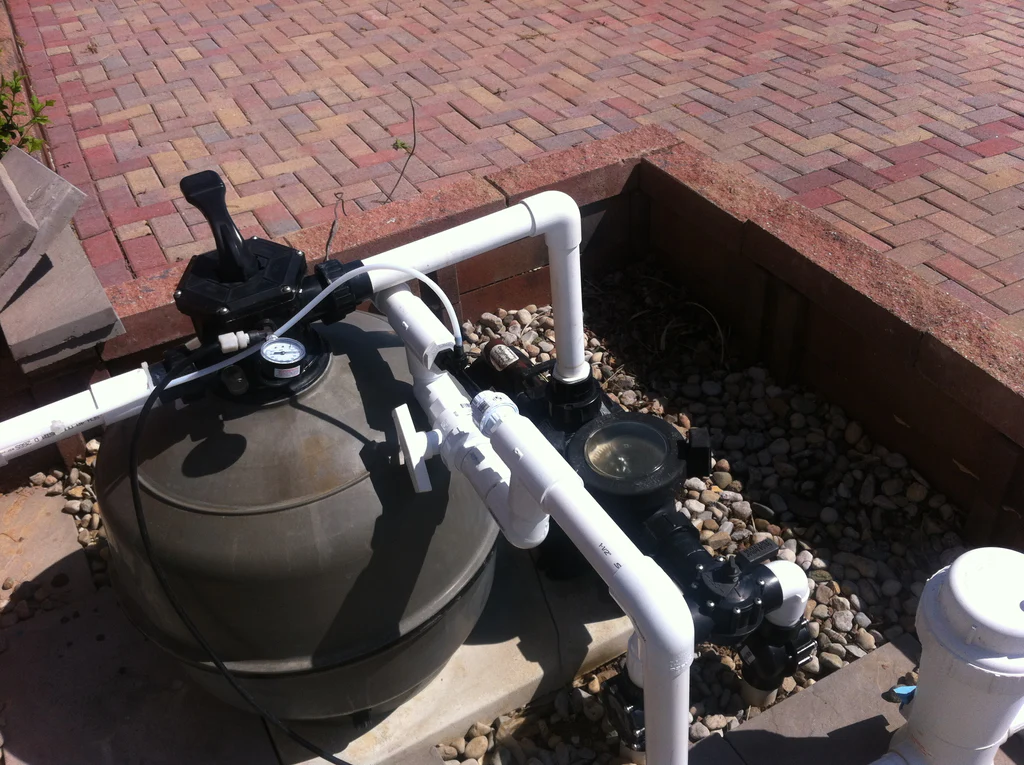
A venturi injector that feeds the ozone gas into the line, installs right into the pool piping via a manifold
Research Ozonated Pools First
Here’s the part that belongs on your research list this fall: finding a pool professional who is willing to install an ozone system, or who already has experience doing it. Installing the SP-3G Ozone Generator isn’t technically difficult. It’s a straightforward addition to your existing plumbing and filtration setup. But a pool pro who has never worked with ozone before may feel unsure about taking it on. That hesitation usually disappears fast with a little support. If your regular pool professional hasn’t installed ozone before, have them contact A2Z Ozone directly. We’ll walk them through the process step by step so they can install it with confidence.
If your current pool company isn’t interested or doesn’t have anyone comfortable with it, use the off-season to ask around and find one that is. Ozone specialists can still be hard to find in some markets, so this search is worth starting well before spring, not after.
Why Fall Is the Smart Time to Look at Ozone
Chlorine costs and availability have been unpredictable in recent years. In August 2020, a fire at the Bio-Lab chemical plant in Lake Charles, Louisiana. A major manufacturer of pool and spa chlorine products, the fire destroyed a significant share of U.S. production capacity (U.S. Chemical Safety Board). Combined with a pandemic-era surge in backyard pool ownership, that event helped trigger what the industry called one of the worst chlorine shortages on record, with chlorine prices climbing roughly 58% year over year in some regions.
An ozone system doesn’t eliminate the need for a residual sanitizer. According to U.S. EPA and International Code Council, your pool still needs some chlorine or bromine on hand to meet local health codes . Ozone does the heavy lifting on disinfection. Pool operators who add ozone systems commonly report chlorine reductions in the 50–90% range , which means smaller chemical orders, lower costs, and far less exposure to a market that can spike without warning.
The Chlorine Cost Isn’t the Worst of It
Every swimmer knows the sharp, eye-watering smell of an over-chlorinated pool. But that smell is really a warning sign of chloramines. They are chemical byproducts formed when chlorine reacts with sweat, sunscreen, and other organic material in the water. But, the smell is only the most obvious symptom.
Research on regular pool users points to more persistent issues:
• Dry skin and hair, and itchy eyes. Chlorine and its byproducts strip away the moisture and natural oils that keep skin’s outer layer moisturized, which can lead to ongoing dryness and irritation in frequent swimmers.
• Respiratory symptoms. Studies of lifeguards and competitive swimmers have found higher rates of coughing, airway irritation, and reduced lung function tied to chronic chlorine exposure in pool environments.
Cutting chlorine use with ozone doesn’t just make the water smell better. It reduces the amount of these byproducts your swimmers are exposed to every time they get in the pool.
What Customers Notice With the SP-3G
• Clean, clear water with fewer chemicals
• Improved filtration performance
• Lower water and chemical consumption
• A more economical, environmentally friendly pool
• No stinging eyes
• No overpowering chlorine smell
• Softer hair and skin after swimming
• A noticeably fresher, more energizing swim
People who’ve made the switch often say the difference is something you have to feel to believe. Some say it is closer to swimming after a summer rainstorm than in a chemical bath. That’s much better than the smell of chlorine lingering after a swim.
What a Real Customer Told Us
“Before coming across A2Z Ozone Inc, I searched the Internet for available pool ozone generators and was disappointed to find that they were far too weak (much less than 1 g/hr, whereas my research indicated a need for at least 1–1.5 g/hr for a 7,400-liter pool) or far too expensive. Needless to say, the SP-3G proved not only powerful — 3 g/hr adjustable, but we let it run at 100% — but also very affordably priced!”
Ready to Plan Ahead?
Fall and winter give you a rare window to handle the two things that actually determine how smooth next season will be: research and scheduling.
- Research now. Look at the costs, the chlorine savings, and which ozone generator fits your pool. Then, just as important, find a pool professional who’s willing to install it, or who already has ozone experience.
- Book the installation slot now, even if you’d rather have the work done closer to opening day. Once spring arrives, pool professionals get booked solid with openings, repairs, and new installs, and last-minute callers often get pushed back weeks or months.
Further Reading
Regulatory / official health guidance
- CDC Model Aquatic Health Code : the definitive U.S. code covering ozone as a “secondary disinfection” system, contact-time requirements, and certification rules.
- WHO Guidelines for Safe Recreational Water Environments: international health-agency guidance that covers ozone among accepted pool disinfection methods.
- EPA Pesticide Devices: A Guide for Consumers: useful if readers want to understand how ozone generators are regulated as devices (not chemical pesticides), which is a common point of confusion.
Ozone-specific science
- International Ozone Association: an overall great source for ozone, the leading professional/scientific body focuses entirely on ozone technology and applications; their “Applications” section and journal, Ozone: Science & Engineering (hosted on Taylor & Francis), are the most authoritative peer-reviewed sources specifically on ozone.


Leave a Reply
Want to join the discussion?Feel free to contribute!